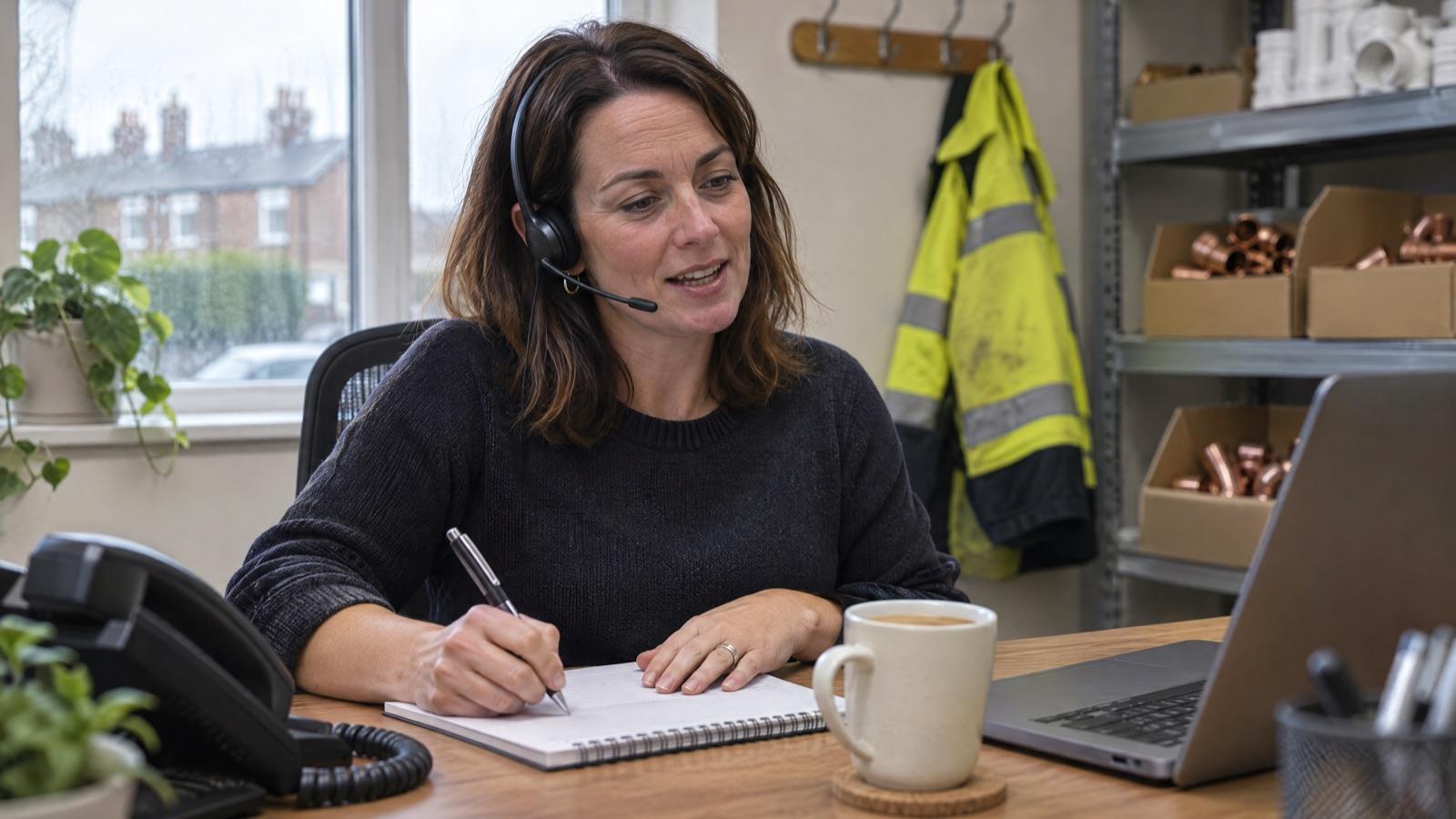

The typical full-time receptionist in the UK earns about £25,900 a year. That is the median from the Office for National Statistics' 2026 earnings survey, and it sits just above the legal floor: at the National Living Wage of £12.71 an hour, a 37.5-hour week works out at about £24,850 a year. Employing that person costs more than the salary. Add employer National Insurance, the minimum workplace pension and a desk, and a £25,900 receptionist costs about £32,000 a year before holiday cover, sickness or recruitment.
Below are the sources, the full build-up and the parts most cost comparisons leave out. Every figure is linked to where we found it, with the date.
What receptionists earn in 2026
| Measure | Figure | Source |
|---|---|---|
| Median full-time annual pay | £25,865 | ONS ASHE 2026 (provisional), Table 14.7a |
| Lower quartile (25th percentile) | £23,229 | ONS ASHE 2026 (provisional) |
| Upper quartile (75th percentile) | £30,077 | ONS ASHE 2026 (provisional) |
| Median full-time hourly pay, April 2026 | £13.77 | ONS ASHE 2026 (provisional), Table 14.5a |
| Advertised average salary | £25,420 | Indeed UK, updated 2 November 2026 |
| Legal minimum, 21 and over | £12.71 an hour | National Living Wage from 1 April 2026 |
ONS figures. The Annual Survey of Hours and Earnings (ASHE) is the most reliable UK pay data because employers fill it in from payroll records rather than job adverts. The 2026 provisional tables were published on 22 October 2026 (ONS, ASHE Table 14). For full-time receptionists (occupation code 4216), the median annual pay is £25,865, with a median of 37.5 paid hours a week. Two caveats from the ONS's own notes: the annual figures cover the tax year that ended on 5 April 2026, so they predate this year's minimum wage rise, and they only include people who have been in the same job for more than a year. The April 2026 hourly median of £13.77 is more current; at 37.5 hours a week that is about £26,900 a year.
Job adverts. Indeed puts the average UK receptionist salary at £25,420 a year, based on 12,200 salaries reported and updated on 2 November 2026 (Indeed UK, receptionist salaries). That lines up closely with the ONS median.
The legal floor. From 1 April 2026 the National Living Wage for workers aged 21 and over is £12.71 an hour, up from £12.21 (GOV.UK, National Minimum Wage and National Living Wage rates). For a 37.5-hour week over a year that is about £24,850. Rates for 18 to 20-year-olds (£10.85) and apprentices (£8.00) are lower.
Pay varies with location, sector and responsibility. A front-of-house receptionist at a London firm or a medical receptionist handling clinical systems will usually sit towards the upper quartile; a part-time role in a small practice may sit at the floor. If you're hiring, check live adverts in your own town for the same hours.
What one really costs to employ
Salary is the start. Here is the employer cost for a full-time receptionist at the ONS median, using the 2026/27 rates.
| Cost line | How it's worked out | A year |
|---|---|---|
| Salary | ONS full-time median | £25,865 |
| Employer National Insurance | 15% of pay above £5,000 | £3,130 |
| Workplace pension (minimum) | 3% of earnings between £6,240 and £50,270 | £589 |
| Desk, phone, headset, software | Our planning allowance of £200 a month | £2,400 |
| Total | £31,984 |
Employer National Insurance
For 2026/27, employers pay Class 1 National Insurance at 15% on earnings above the secondary threshold of £5,000 a year (£96 a week, £417 a month) (GOV.UK, rates and thresholds for employers 2026 to 2027, last updated 1 September 2026). On £25,865 that is (£25,865 − £5,000) × 15% = £3,130.
One thing that can change this a lot for a small business: the Employment Allowance lets eligible employers reduce their employer National Insurance bill by up to £10,500 a year (GOV.UK, Employment Allowance). If you are eligible and not already using the allowance on other staff, it could cover the whole £3,130. You can't claim it if your company has only one director and that director is the only employee paying secondary Class 1 National Insurance (GOV.UK, Employment Allowance eligibility). Ask your accountant whether it applies to you.
Workplace pension
Eligible workers earning more than £10,000 a year must be automatically enrolled into a workplace pension. For 2026/27 the qualifying earnings band is £6,240 to £50,270, unchanged from last year (The Pensions Regulator, earnings thresholds). The legal minimum is 3% from the employer and 8% in total, on earnings within that band (GOV.UK, workplace pensions). On £25,865 the employer minimum is (£25,865 − £6,240) × 3% = £589. Many employers pay 3% of the full salary instead, which would be £776.
Desk, equipment and software
There is no official figure for this, so we use a planning allowance of £200 a month (£2,400 a year) for a desk and chair, a phone line or seat on your phone system, a headset, a computer and software licences. Your own figure could be lower if the desk already exists, or higher in a city-centre office.
The costs that don't show on the payslip
Holiday cover
A full-time employee is entitled to 5.6 weeks (28 days) of paid holiday a year, and you can include bank holidays in that (GOV.UK, holiday entitlement). The holiday pay is already inside the salary. The cost that isn't is cover: for about 28 working days someone else has to answer the phone. If you cover with a temp paid the same day rate, that is roughly another £2,800 a year (£25,865 ÷ 260 working days × 28). If you cover by pulling someone off their own job, the cost is real but harder to see.
Sickness
From April 2026, Statutory Sick Pay is paid from the first day of illness, at £123.25 a week or 80% of the employee's average weekly earnings, whichever is lower (GOV.UK, rates and thresholds for employers 2026 to 2027). As with holidays, the bigger cost for a receptionist is usually the unanswered phone, not the sick pay.
Recruitment and turnover
Advertising, interviewing and training a new receptionist takes time and money, and you pay it again whenever someone leaves. If you use an agency, ask for the fee in writing before you start; it is normally charged as a percentage of first-year salary. Budget for a few weeks before a new starter knows your services, prices and customers well enough to work unsupervised.
Management
Someone has to set priorities, check the work, approve holidays and handle problems. In a small business that is usually the owner.
The figure we use: £31,984 a year
On our receptionist cost comparison and in our calculators we use a UK receptionist cost of about £31,984 a year, built from the ONS median salary:
| Cost line | Per year |
|---|---|
| Salary (ONS 2026 median, full-time receptionists) | £25,865 |
| Employer National Insurance (15% above £5,000) | £3,130 |
| Pension (3% of qualifying earnings) | £589 |
| Desk and equipment | £2,400 |
| Total | £31,984 |
Our older working figure started from £24,000. That is about £12.27 an hour for a 37.5-hour week, which is below the £12.71 National Living Wage for anyone aged 21 or over since April 2026, so we now use the ONS median instead. Everything we quote, including our pricing pages and cost calculator, uses the £31,984 figure.
What the alternatives cost
You don't always need an employee. Three other options are common:
- A pay-per-call answering service costs a few hundred pounds a month for light call volumes. If your phone only rings 10 or 15 times a day, it will almost certainly be cheaper than any full-time person. Our guide to how many calls justify a full-time receptionist shows where the line falls.
- An AI answering service can answer simple questions and take bookings for less again, but hands anything unusual to a person.
- A dedicated remote receptionist is one named person who works only for you, from somewhere else. Cape Solutions provides this from Cape Town for £1,200–£1,600 a month plus a one-off £1,500 setup, which is £15,900–£20,700 in the first year. Against the £31,984 cost of employing someone at the median salary, that is about 35–50% less than a UK hire in year one, including setup. Recruitment, salary, HR, payroll, equipment and the office are inside the fee.
We explain how these differ, and who each one suits, in what is a virtual receptionist?
Which should you choose?
Employ someone in the UK if the job needs a person at your front desk: greeting visitors, handling post and deliveries, or working in clinical systems that can't be reached remotely. No remote option replaces that.
If the job is mainly the phone, the diary and follow-up, work out first whether there is a full day's work in it. Our workload check does the sums in two minutes and tells you whether pay-per-call would be cheaper. If there is a full day, compare a UK hire with a dedicated remote receptionist on the whole cost above, not the salary alone.
Frequently asked questions
What is the average receptionist salary in the UK in 2026?
The ONS 2026 provisional earnings survey puts the median for full-time receptionists at £25,865 a year, with the middle half earning between £23,229 and £30,077. Indeed's advertised average, updated 2 November 2026, is £25,420.
What is the minimum a full-time receptionist can be paid?
From 1 April 2026 the National Living Wage for workers aged 21 and over is £12.71 an hour. For a 37.5-hour week that is about £24,850 a year. Lower rates apply to 18 to 20-year-olds and apprentices.
How much does it cost to employ a receptionist on top of salary?
At the ONS median of £25,865, employer National Insurance adds about £3,130 and the minimum pension about £589. With £2,400 for a desk and equipment, the total is about £32,000 a year, before holiday cover, sickness and recruitment.
Can the Employment Allowance cover a receptionist's National Insurance?
Often, yes. Eligible employers can reduce their employer National Insurance bill by up to £10,500 a year. A company whose only director is the only employee paying secondary Class 1 National Insurance can't claim. Check eligibility with your accountant.
Is a remote receptionist cheaper than employing one?
Usually, if there is a full day's work. A dedicated remote receptionist from Cape Solutions costs £1,200–£1,600 a month plus a one-off £1,500 setup. If there isn't a full day's work, a pay-per-call service is cheaper still. The workload check shows which applies to you.