
A virtual receptionist is someone, or something, that answers your business phone without sitting in your office. The term covers three quite different services: a shared answering service, where a team of receptionists answers calls for many businesses and takes messages; an AI receptionist, where software answers the call; and a dedicated remote receptionist, one named person who works only for you from somewhere else. They differ in price, in what they can actually do, and in who they suit.
This guide explains each one plainly, with typical costs, so you can work out which you need. In short: if your phone rings a handful of times a day, a shared service is the cheapest sensible option. If you need calls answered and bookings made and enquiries chased, all day, a dedicated person is usually the better buy.
Shared answering services
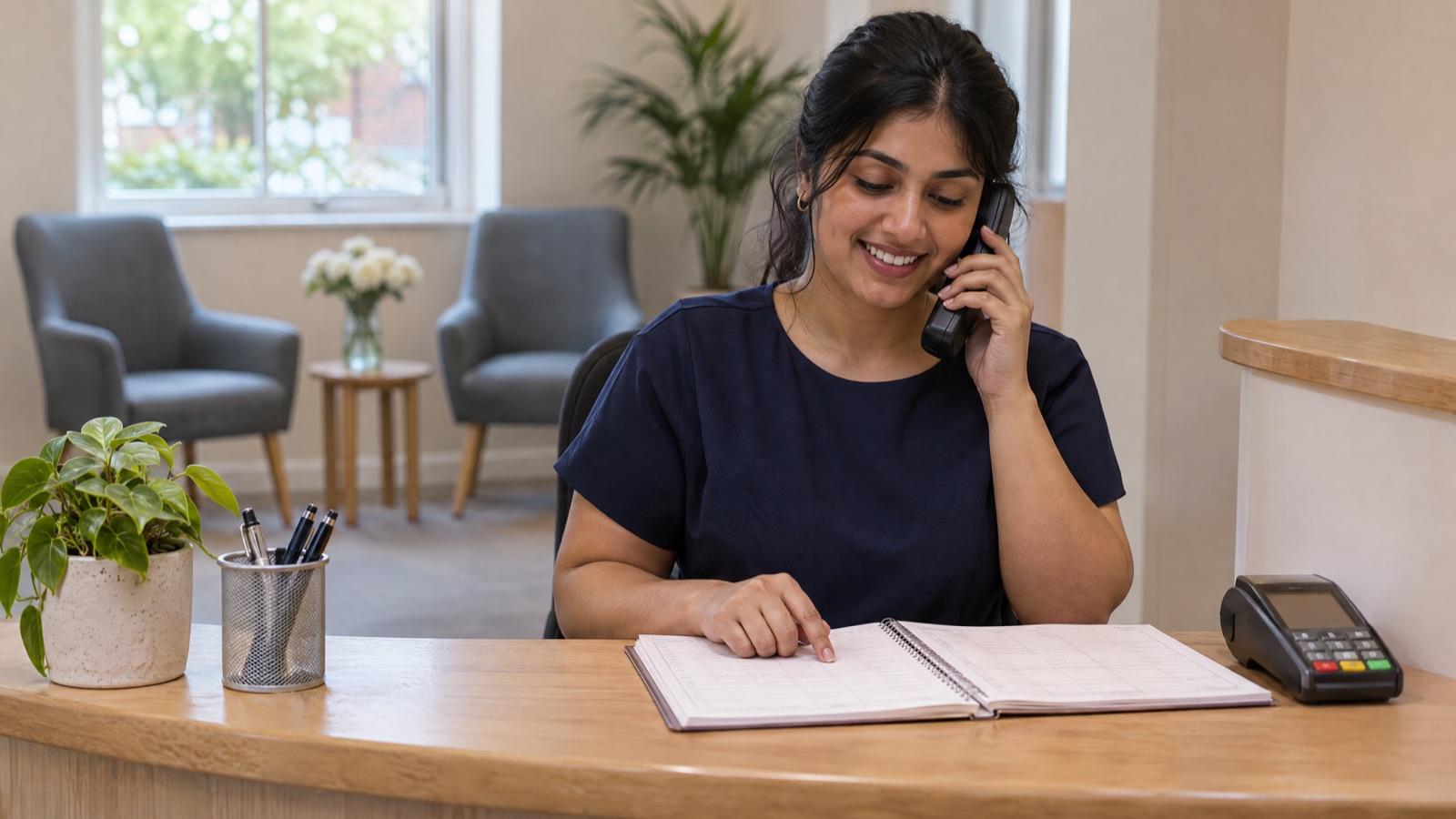
This is what most people mean by a virtual receptionist. You divert your phone to the service, usually when you're busy, out or after a set number of rings. A receptionist answers in your business name using a script you provide, takes a message, and emails or texts it to you. Many will also transfer urgent calls, and some will book simple appointments into an online calendar.
How it's priced. Usually per call, or a small monthly fee plus a per-minute rate. When we checked UK providers in October 2026, typical published prices were about 99p a call, or about £15 a month plus £1.20 a minute. Check current prices and what counts as a "call" or a "minute" before you sign up, because rounding rules vary.
Good at:
- catching calls you would otherwise miss;
- covering lunch, holidays, busy spells and, with many providers, evenings and weekends;
- low volumes: you pay for what you use.
Less good at:
- knowing your business. The person who answers is covering many companies, so detailed questions about prices, availability or a customer's history usually become "I'll pass that on";
- work beyond the call. Chasing quotes, ringing back enquiries and replying to emails are generally not part of the service;
- high volumes. Per-minute costs climb quickly once you have dozens of calls a day.
Suits: sole traders, small practices and anyone whose main problem is missed calls rather than a backlog of work.
AI receptionists
An AI receptionist is software that answers the phone, talks to the caller in natural language, answers common questions from information you give it, and can often book into your calendar. The better ones hand the call to a person when the caller asks for one or the question is outside what they know.
How it's priced. Typically a monthly subscription, sometimes with usage charges. As one example, Moneypenny's AI receptionist page lists a starting price of £25 a month, says pricing is built around what you need, and describes transferring callers to your team or a human receptionist when needed (Moneypenny, AI receptionist, checked November 2026).
Good at:
- answering instantly, any time, including several calls at once;
- routine questions: opening hours, location, prices you've published;
- simple bookings with clear rules.
Less good at:
- anything that needs judgement, such as a worried patient, an upset customer or a job that doesn't fit the usual categories;
- outbound work: it waits for calls rather than chasing your quotes;
- callers who simply want a person. Some will hang up.
Suits: businesses with a high share of simple, repetitive calls, and those that need round-the-clock answering at low cost.
A dedicated remote receptionist
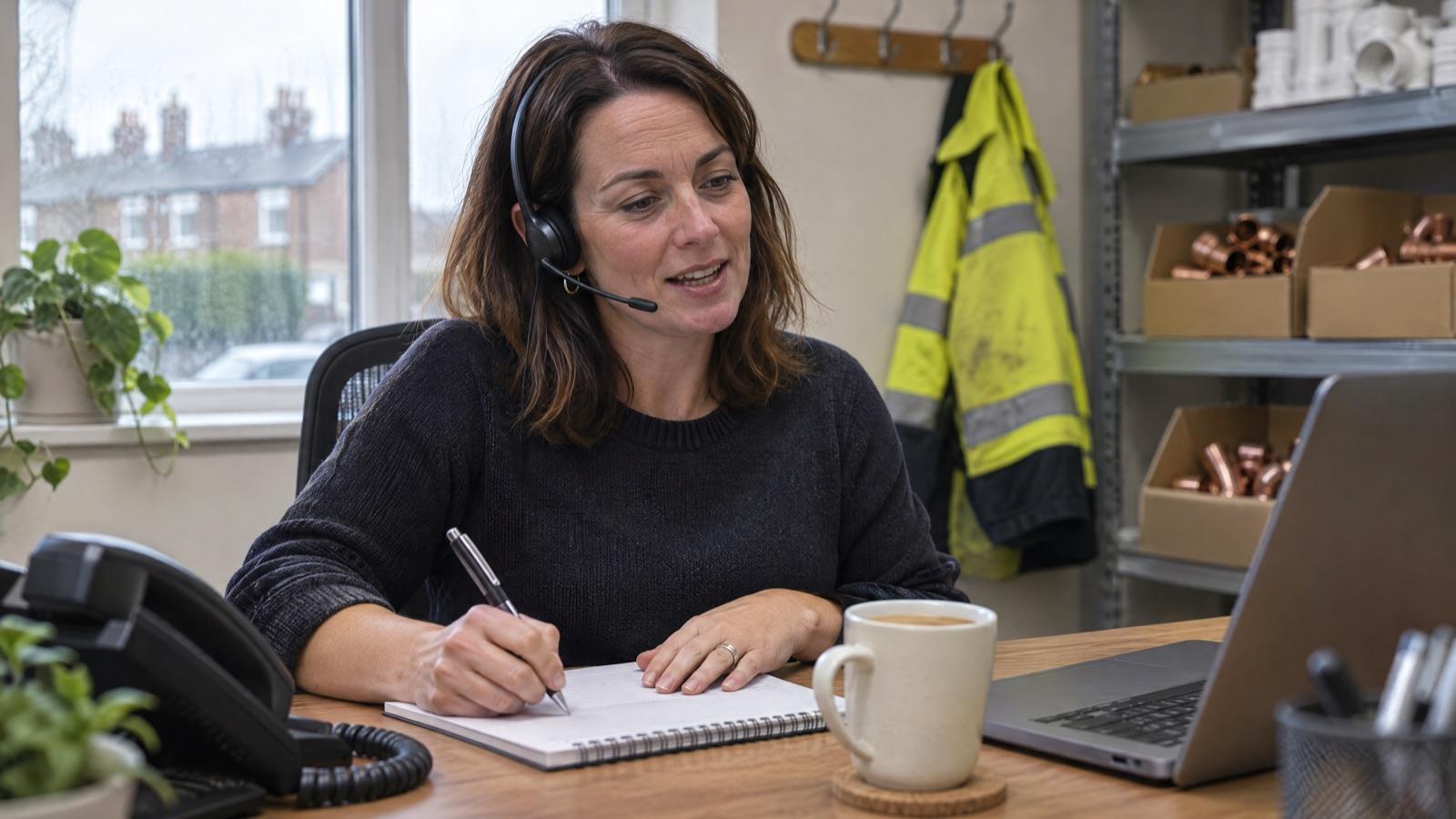
The third option is a single person who works only for your business, full time, but not in your building. They answer your calls in your name, use your booking system and CRM, reply to customer emails, and work through your follow-up list. Because they only work for you, they learn your services, prices, regular customers and the way you like things done.
This is what Cape Solutions provides: one named, full-time person in our Cape Town office, working UK weekday hours. South Africa is one or two hours ahead of the UK depending on the time of year, so your receptionist's normal working day covers yours. The cost is £1,200–£1,600 a month plus a one-off £1,500 setup, with recruitment, salary, HR, payroll, equipment and the office included in the fee.
Good at:
- the whole front-office job: calls, diary bookings, enquiry and quote follow-up and customer emails;
- continuity: the same person every day, who knows your customers;
- busy days, where a full workload is cheaper on a flat fee than on per-minute charges.
Less good at:
- light workloads. If there isn't a full day's work, you're paying for idle time and a shared service will cost less;
- 24/7 cover. One person works one shift; we cover UK weekdays only;
- anything physical. They can't greet visitors, sign for parcels or tidy reception.
Suits: busy trades firms, clinics, showrooms and online retailers with enough calls, bookings and follow-up to fill a day. See how it works for dental and private clinics and for ecommerce and retail businesses.
The three side by side
| Shared answering | AI receptionist | Dedicated remote person | |
|---|---|---|---|
| Who answers | Whoever is free in a shared team | Software | One named person |
| Knows your business | From a script | From what you load in | Learns it day to day |
| Takes bookings | Sometimes, simple ones | Often, with clear rules | Yes, in your system |
| Chases enquiries and quotes | Rarely | No | Yes |
| Hours | Often 24/7 | 24/7 | Their working day (for us, UK weekdays) |
| Typical price | About 99p a call or £1.20 a minute | From about £25 a month | £1,200–£1,600 a month + £1,500 setup (Cape) |
| Best for | Low volume, missed calls | Simple, repetitive calls | A full day of calls, bookings and follow-up |
And employing someone yourself?
Of course, you can still hire an in-house receptionist. The median full-time receptionist earns about £25,900 a year, and once employer National Insurance, pension and a desk are added the cost is about £32,000. Our receptionist salary guide builds that up with sources. An in-house hire is the right answer when you need someone physically at the front desk. If the job is mainly the phone and the diary, compare all four options on cost and on what they'll actually do. Our receptionist cost comparison sets them side by side.
How to choose
Start with the workload, not the label. Count, for a typical day:
- calls that need a person;
- bookings and changes;
- enquiries and quotes to chase;
- customer emails.
Then ask three questions.
Is there a full day's work? If not, choose a shared service or an AI receptionist. Our guide to how many calls justify a full-time receptionist shows the maths, and the workload check runs it for you.
Does the work go beyond answering? If you need bookings made properly and quotes chased, a message-taking service won't solve it. Read how fast to call back a web enquiry or quote if follow-up is where you're losing work.
When do calls arrive? If your problem is evenings and weekends, choose a 24/7 shared or AI service. If it's the working day, a dedicated person covers it.
Questions to ask any provider
- Who will answer my calls, and will it be the same person each time?
- What exactly is a "call" or a "minute" for billing, and how is it rounded?
- Which tasks are included: messages, transfers, bookings, follow-up, email?
- Which of my systems will you work in, and how is access controlled?
- What happens when my receptionist is on holiday or ill?
- What are the minimum term and notice period?
If you think you have a full day of calls, bookings and follow-up, run the workload check first. It tells you honestly whether a dedicated person is worth it or whether a pay-per-call service would do the job for less.
Frequently asked questions
What does a virtual receptionist do?
A virtual receptionist answers your business calls remotely, in your business name. Depending on the type, they take messages, transfer urgent calls, book appointments and, with a dedicated person, also chase enquiries and reply to customer emails.
Is a virtual receptionist the same as an answering service?
Often, yes: most services sold as virtual receptionists are shared answering services, where a team answers for many businesses. The term is also used for AI receptionists and for a dedicated remote person who works only for you.
How much does a virtual receptionist cost in the UK?
Shared answering services typically charge about 99p a call or a small monthly fee plus about £1.20 a minute. AI receptionists start from around £25 a month. A dedicated remote receptionist from Cape Solutions costs £1,200–£1,600 a month plus a one-off £1,500 setup.
Which type of virtual receptionist is best for a small business?
For light call volumes, a shared answering service or AI receptionist is cheaper. A dedicated person is worth it when calls, bookings and follow-up fill most of a working day. The workload check helps you decide.